Company history
150 years of Mestemacher
(1871-2021)
The 150-year-old industrial bakery Mestemacher is a pioneer of ecological and social activities to promote organic farming, equality and work-life balance.
The family business Mestemacher is the world market leader for bread specialties with a long shelf life when kept unopened.
Rapid growth over many years has helped to develop Mestemacher into a healthy company that will continue to be an important market player in the bread and baked goods industry in the future.
THE ERA OF SOPHIE AND WILHELM MESTEMACHER
1871 – 1911
1871
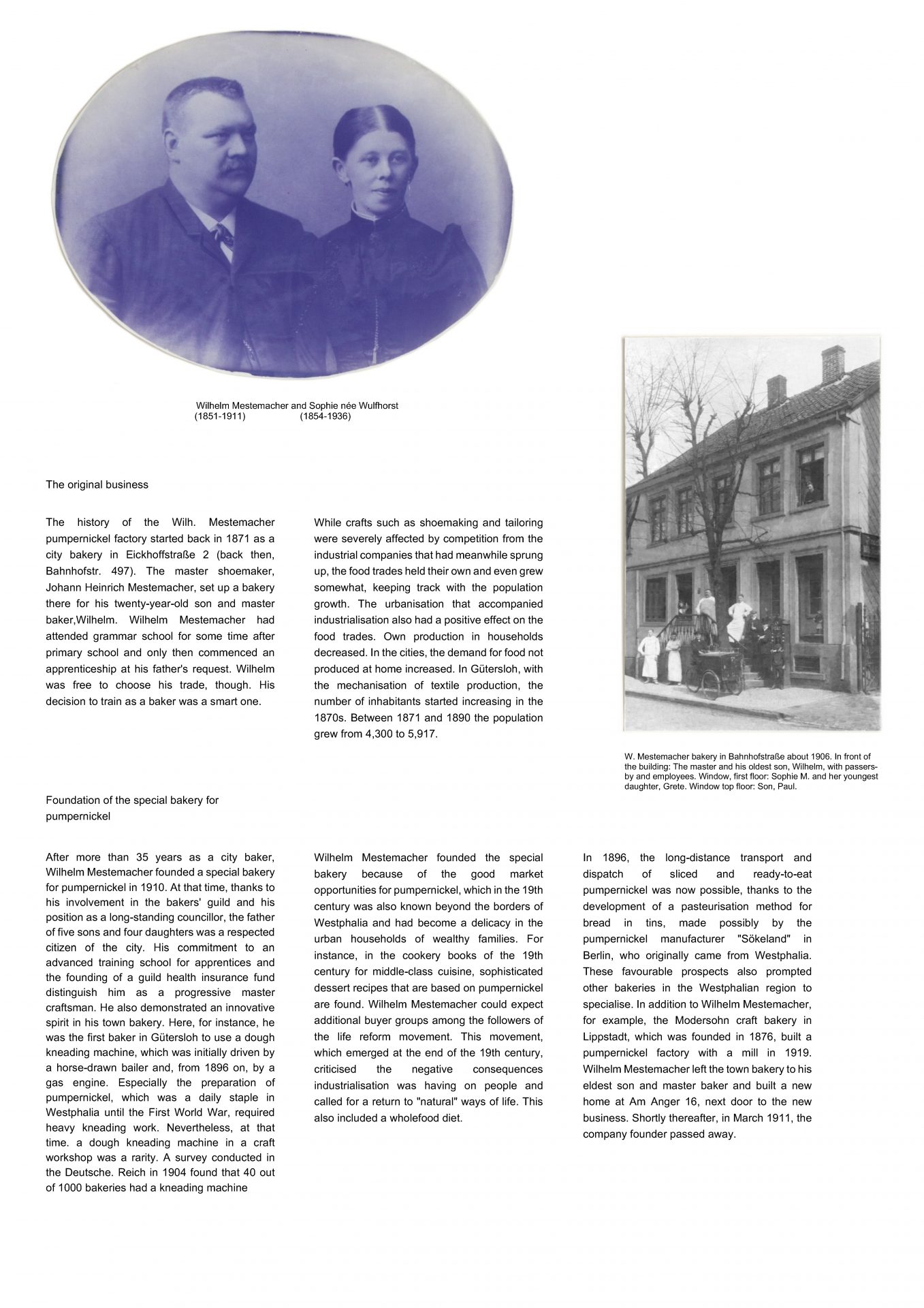
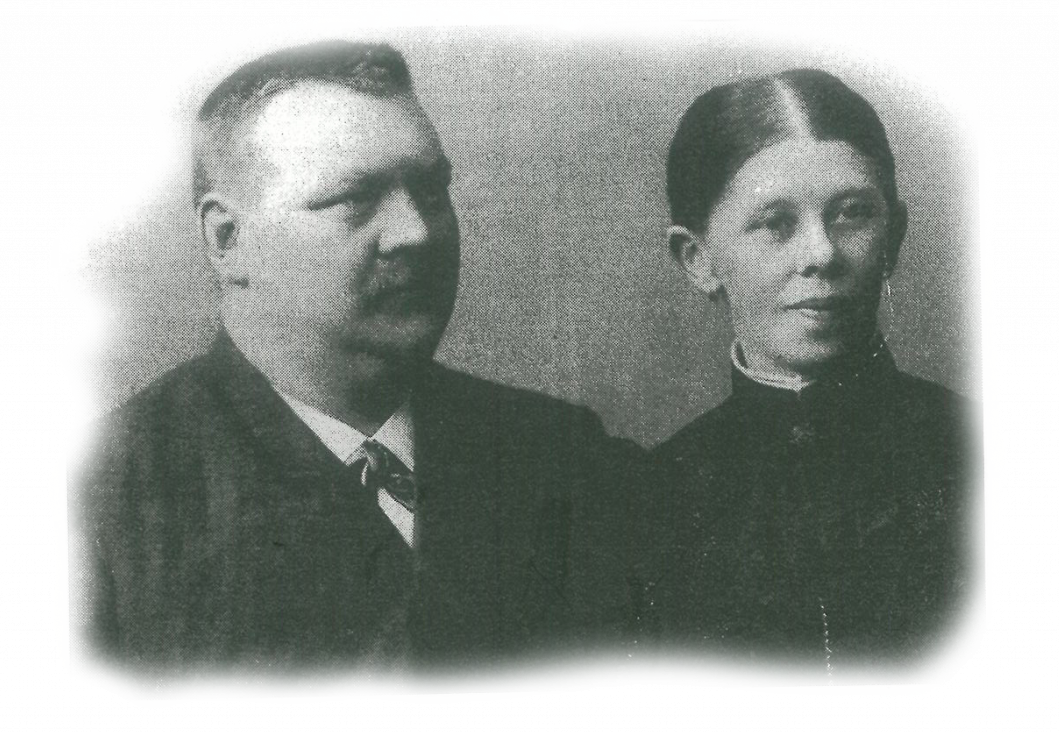
Wilhelm Mestemacher founds a bakery.
In the following years
Founding a family
A little later, he founds a family with Sophie Mestemacher, née Wulfhorst. Over the next couple of years, Sophie Mestemacher gives birth to nine children.
In the following years
In the following years
Westphalian pumpernickel becomes a bread delicacy
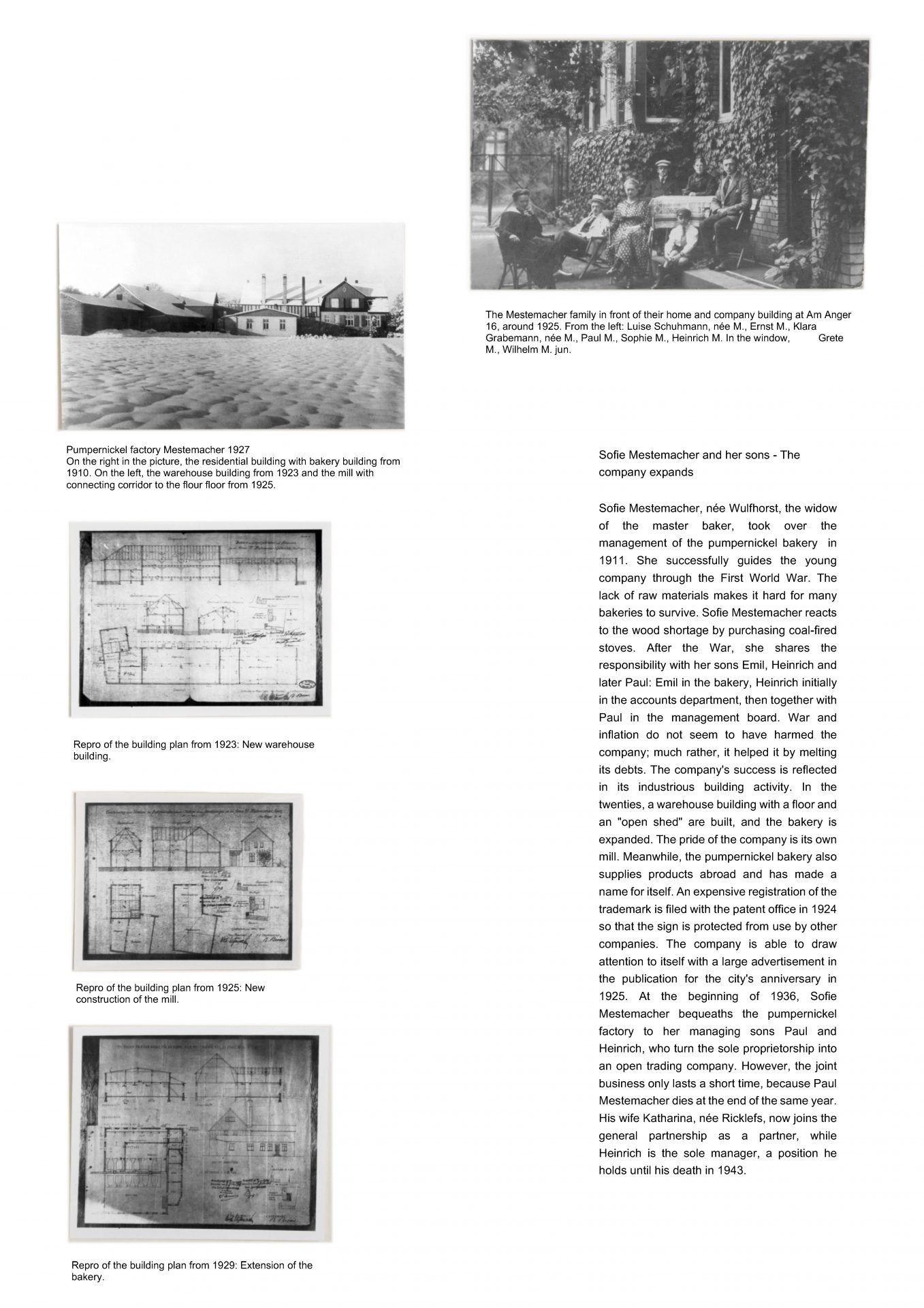
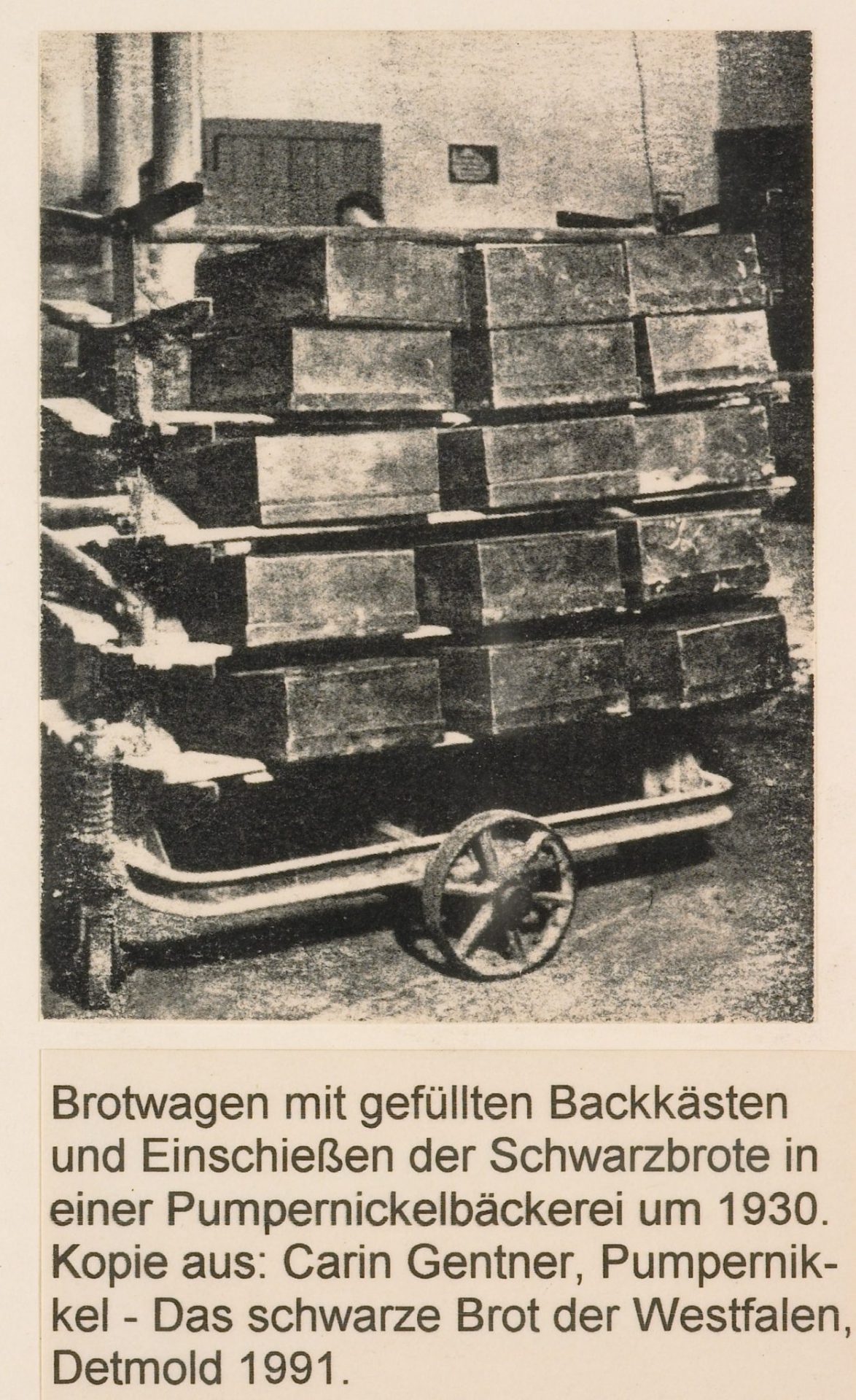
The demand for Westphalian pumpernickel continues growing. The development of a pasteurisation method for bread in tins made it possible to transport and ship sliced pumpernickel loaves over long distances. In 1910, Wilhelm Mestemacher built a modern bakery in Gütersloh (Am Anger 16), which specialises in Westphalian pumpernickel.
In the following years
Wilhelm Mestemacher passes away shortly after the opening of the state-of-the-art bakery. After Wilhelm‘s passing in 1911, his wife, Sophie, takes over the company‘s management. She continues modernising and investing.
In the following years
THE ERA OF WIDOW, SOPHIE MESTEMACHER, SON, HEINRICH MESTEMACHER, SON PAUL AND DAUGHTER-IN-LAW, KATHARINA MESTEMACHER, NÉE RICKLEFS
1911 – 1943
1911
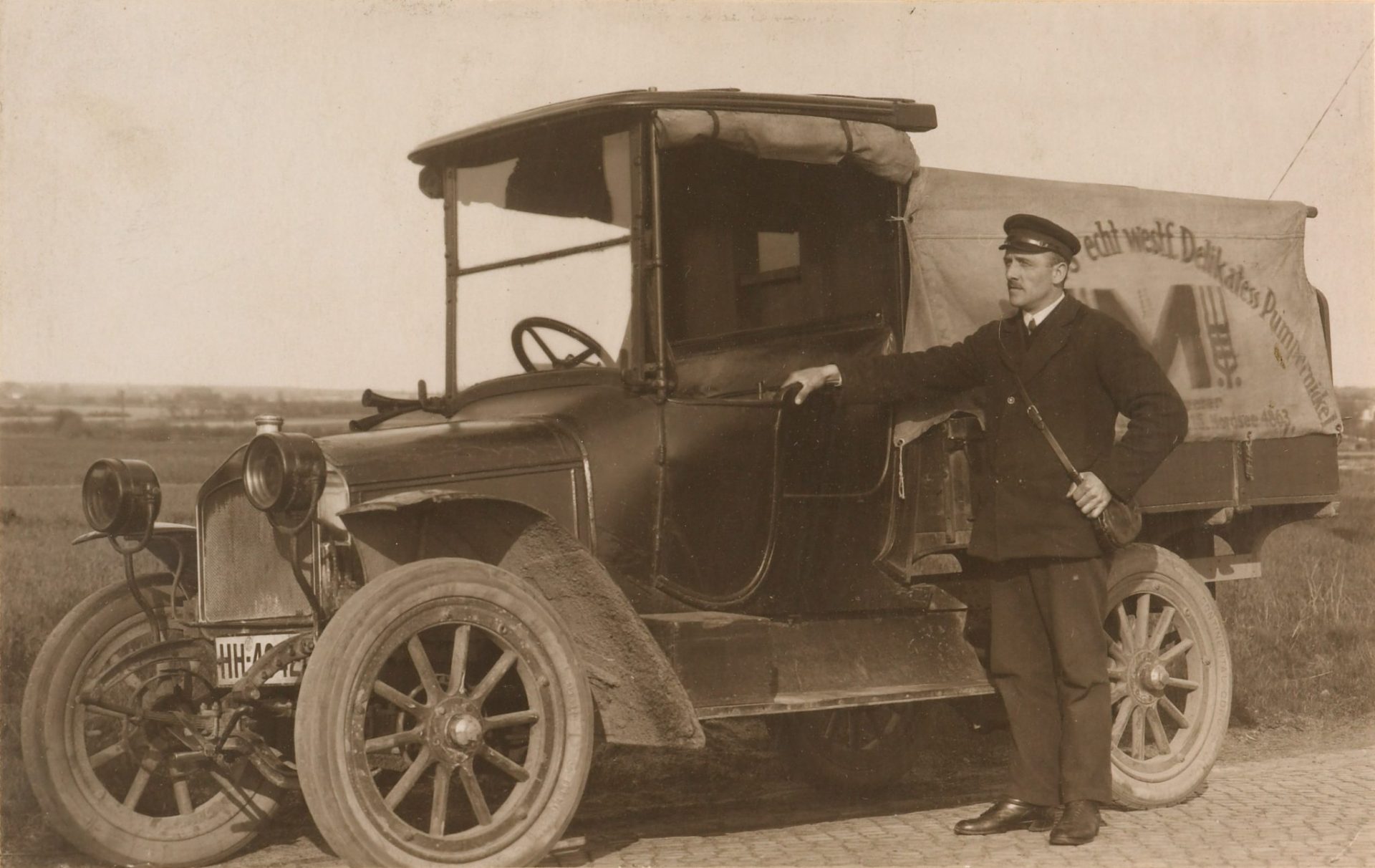
The 9-fold mother and entrepreneur, Sophie Mestemacher, guides the company through the challenging times of the 1st World War.
After the 1st World War
In memory of her late husband, Sophie Mestemacher continued to invest and modernise the bakery, thus helping the company to achieve continued growth. The innovative widow became a marketing pioneer.
After the 1st World War
1924
Milestone 3
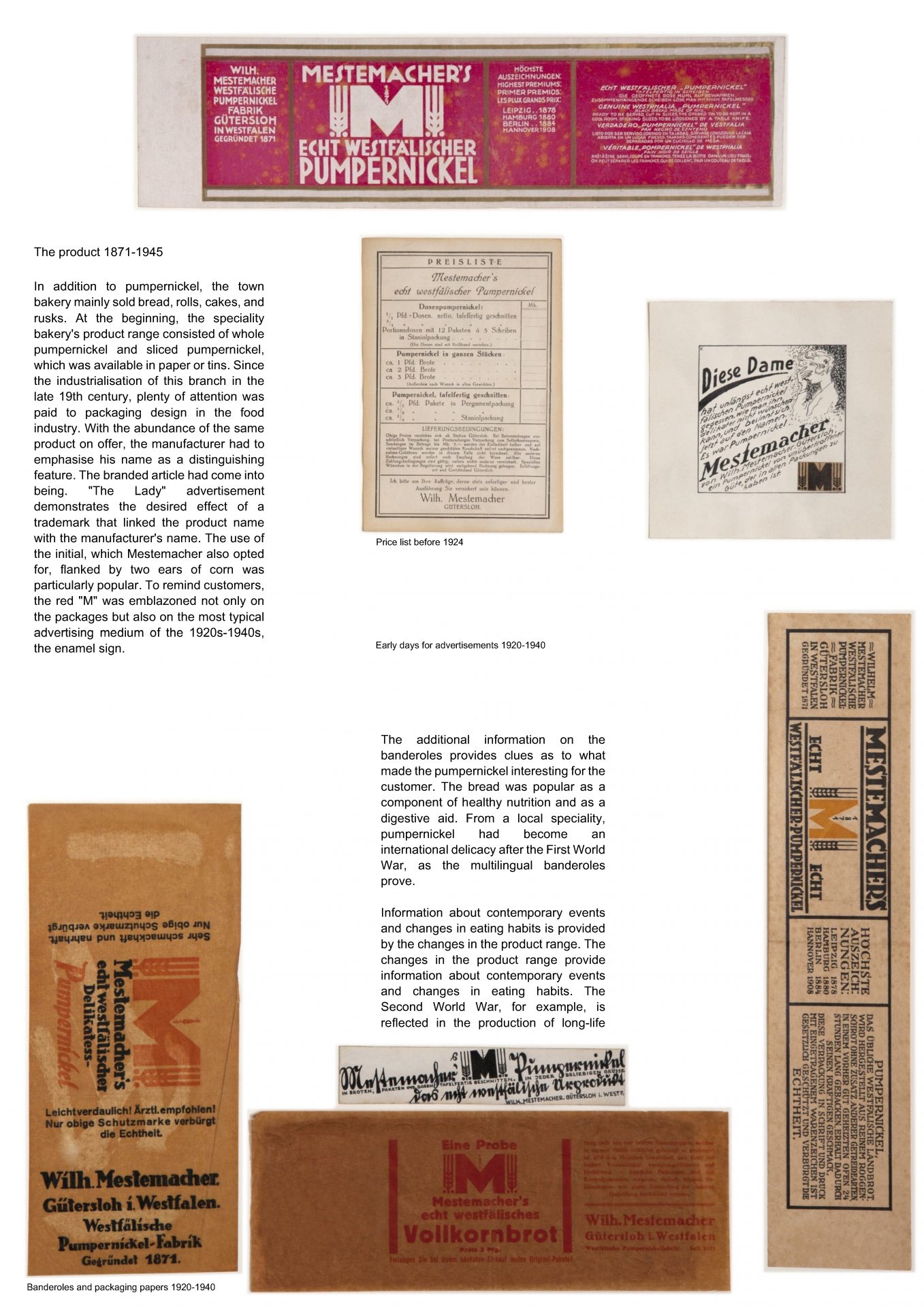
In 1924, the costly registration of the Mestemacher trademark with the patent office is realised. For the first time ever, advertising investments are made with the goal of promoting sales.
1936
Milestone Title
Early in 1936, Sophie Mestemacher bequeathed the pumpernickel bakery to her sons, Paul und Heinrich, who at that time were already running the business. Mestemacher became an open trading company. After Paul‘s death in 1936, his wife Katharina, (née Ricklefs), became a partner in the open trading company. The sole managing director, her brother-in-law, Heinrich, passed away in 1943.
1936
THE ERA LORE SCHITTENHELM, NÉE MESTEMACHER, KLARA GRABEMANN, NÉE MESTEMACHER, ERNST MESTEMACHER AND WILLY SCHITTENHELM
1943 – 1985
1943
The son of Sophie Mestemacher, Ernst Mestemacher, technical director of a Berlin mechanical engineering company, briefly manages the business of the managerless pumpernickel factory from afar. Under the auspices of her uncle Ernst, the 19-year-old granddaughter of Wilhelm and Sophie Mestemacher, Lore Mestemacher, is trained in production technology in her grandparents‘ business.
Klara Grabemann, née Mestemacher, bolsters the ailing pumpernickel bakery with equity. She left her open trading company shares to her niece, Lore Mestemacher.
1956
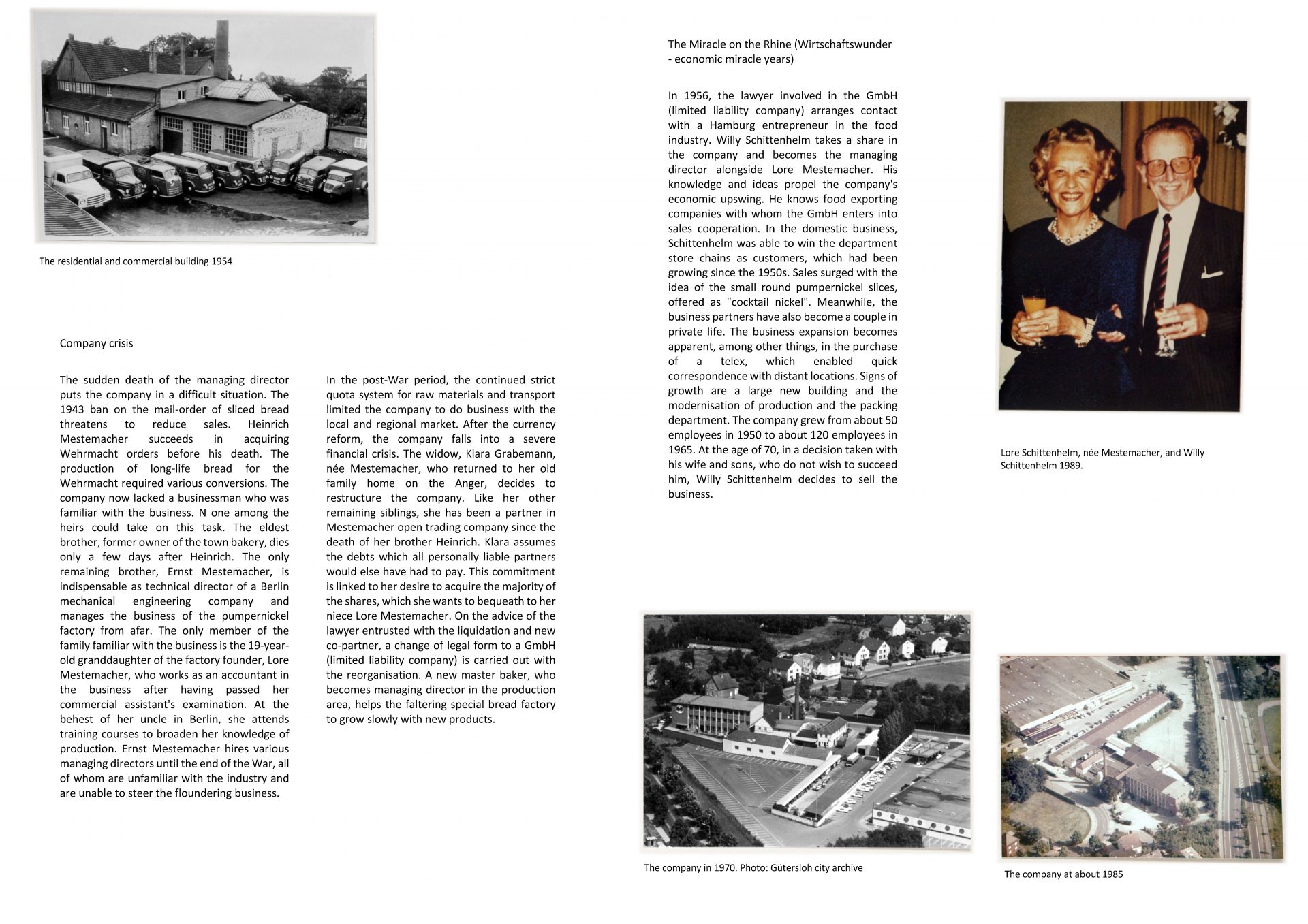
In 1956, Hamburg-based food entrepreneur, Willy Schittenhelm joins Lore Mestemacher on the management board. They get married shortly thereafter. Their marriage produces two sons. Willy Schittenhelm‘s knowledge and ideas accelerate the company‘s economic growth. The foreign business also develops excellently. At the age of 70, the entrepreneurial couple decides to sell the firm, as their sons don’t wish to succeed them.
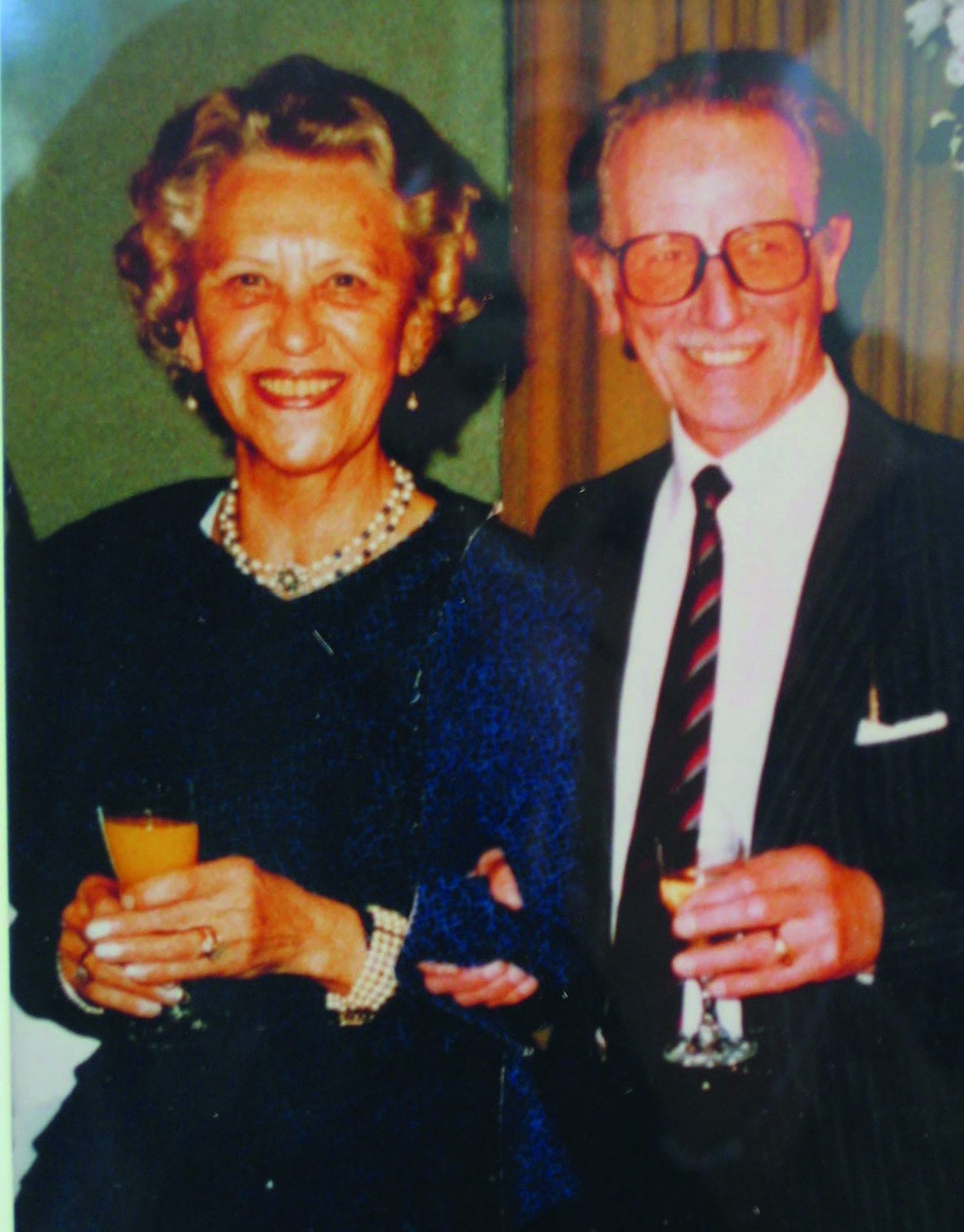
The entrepreneurial couple Lore, née Mestemacher, and Willy Schittenhelm.
1956
THE ERA ALBERT AND FRITZ DETMERS
1985 – 1994
1985
Milestone
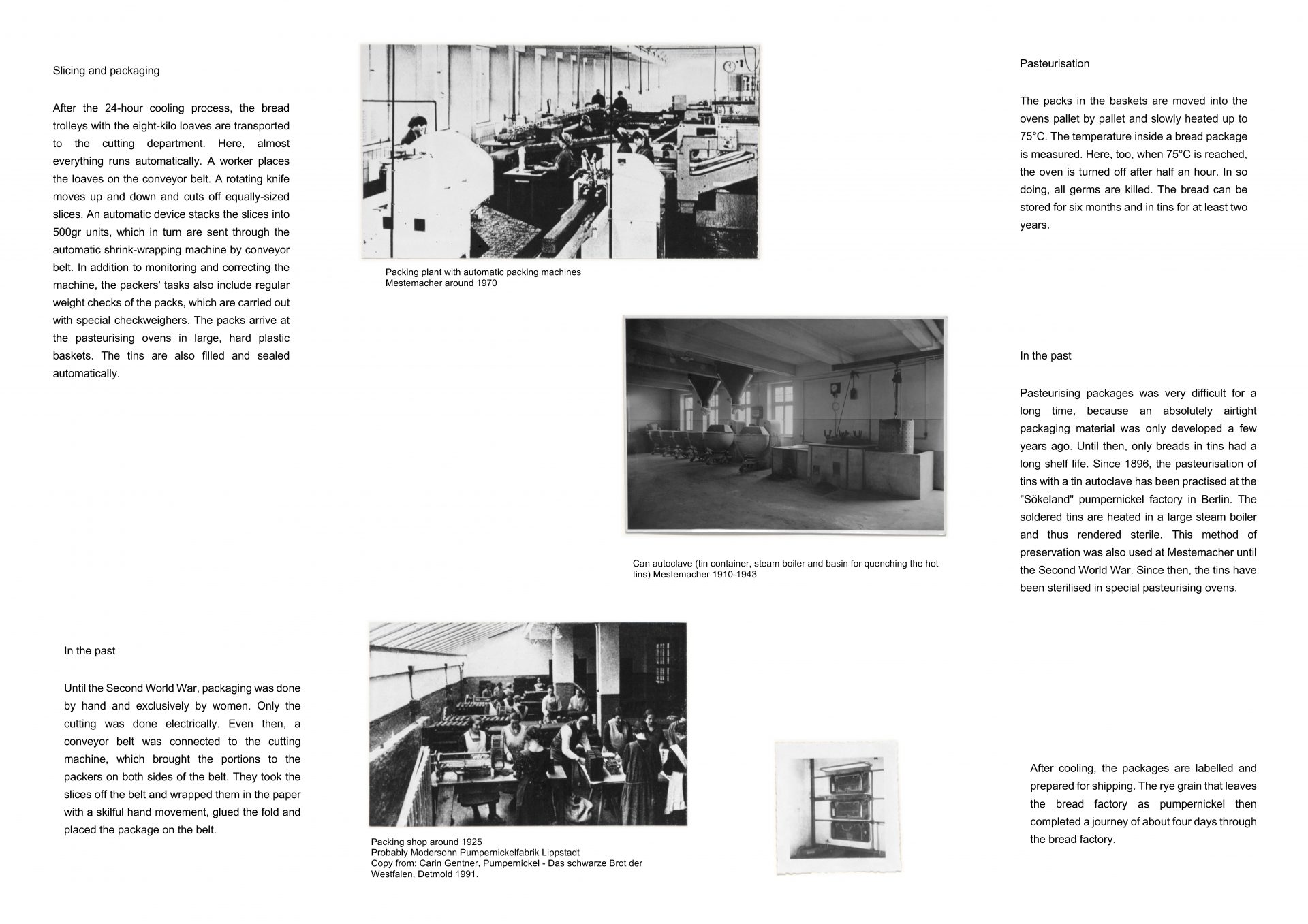
The bread factory is purchased by the brothers Albert and Fritz Detmers in 1985, owner of another tradition-steeped bakery in Bielefeld-Jöllenbeck. When the brothers bought Mestemacher, they sell their Detmers plant bakery to what was then Wendeln delivery plant bakery.
As a result, the Gütersloh-based firm becomes the focus of Albert and Prof Dr Ulrike as well as Fritz and Helma Detmers.
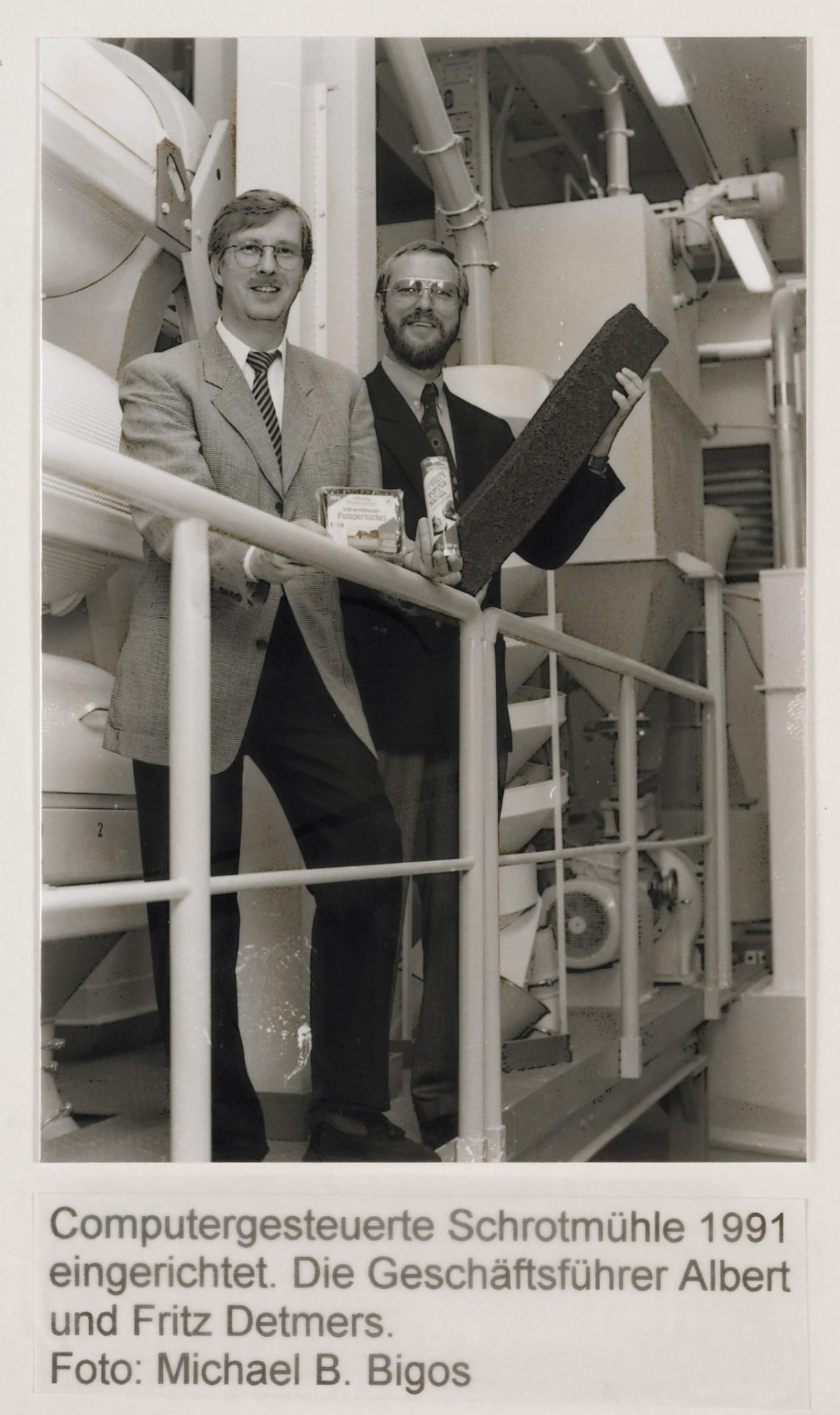
1985
Mestemacher starts out as an organic bread pioneer. For the first time ever, Mestemacher produces organic wholemeal rye breads in self-service packaging for Germany and abroad. Since then, Mestemacher has continued to take an avant-garde approach by promoting ecological agriculture.
1985
1992
The entrepreneurial couples, Albert and Prof Dr Ulrike Detmers, née Weber, as well as Fritz and Helma Detmers, née Strehle, each purchase 50% of Modersohn‘s Mühlen- und Backbetrieb GmbH in Lippstadt, which has existed since 1876.
THE ERA ALBERT DETMERS, PROF DR ULRIKE DETMERS, FRITZ DETMERS
1994– today
1994-today
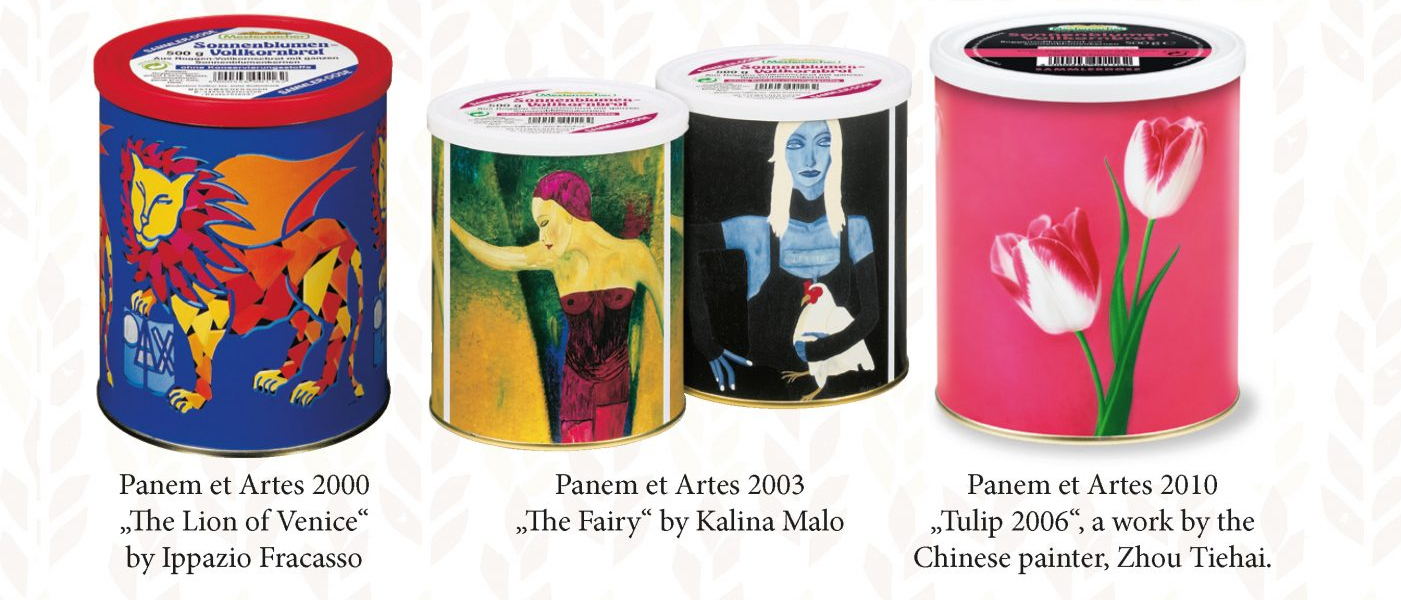
In 1994, the long-standing business cooperation of the entrepreneurial couple, Albert and Prof Dr Ulrike Detmers, intensifies. Together with their brother and brother-in-law, Fritz Detmers, they implement further innovations both inside and outside of the company. Together with Helma Detmers, co-partner of Mestemacher, the couple stand for modern corporate management. The new “bread and art” packaging, “panem et artes”, was born from an idea conceptualised by the artist Ippazio Fracasso- Baacke. Fracasso-Baacke‘s works of art are collected by the entrepreneurial couple, Albert and Ulrike. The bread art decorative box has been causing a furore for years. Annually changing printed paintings encourage the consumers‘ passion for collecting.
Additional growth drivers of the next years
Additional product innovations, improvements in product qualities, technical innovations, more company acquisitions, such as the purchase of Aerzener Brot und Kuchen GmbH in 2002, as well as advertising and PR investments spur steady growth. The company has also accelerated its expansion by boosting its capacity and adding further products to its portfolio, such as frozen cakes, crispbread, muesli and international bread specialities like naan, pita, organic, and standard wraps, focaccia, organic spelt toast, as well as organic wholemeal wheat toast. The lifestyle bakery enjoys a sound international reputation and growing demand.
2000
The „Mestemacher – the lifestyle bakery“ claim is born
The foundation stone for the new company culture is laid in 2000 with the Mestemacher – the lifestyle bakery claim. 2000 Mestemacher evolves avant-garde equality campaigns. 2001 The Mestemacher „KITA Preis“ is initiated. 2002 Mestemacher awards the „MESTEMACHER AWARD FEMALE MANAGER OF THE YEAR“ for the first time. 2004 the first edition of the „Mestemacher Women‘s Calendar“ is edited. In 2006, the company awards the „Mestemacher Award Top Father of the Year“ for the first time. The company has been awarding the „Mestemacher Award LIVING TOGETHER“ since 2017.
2000
2020
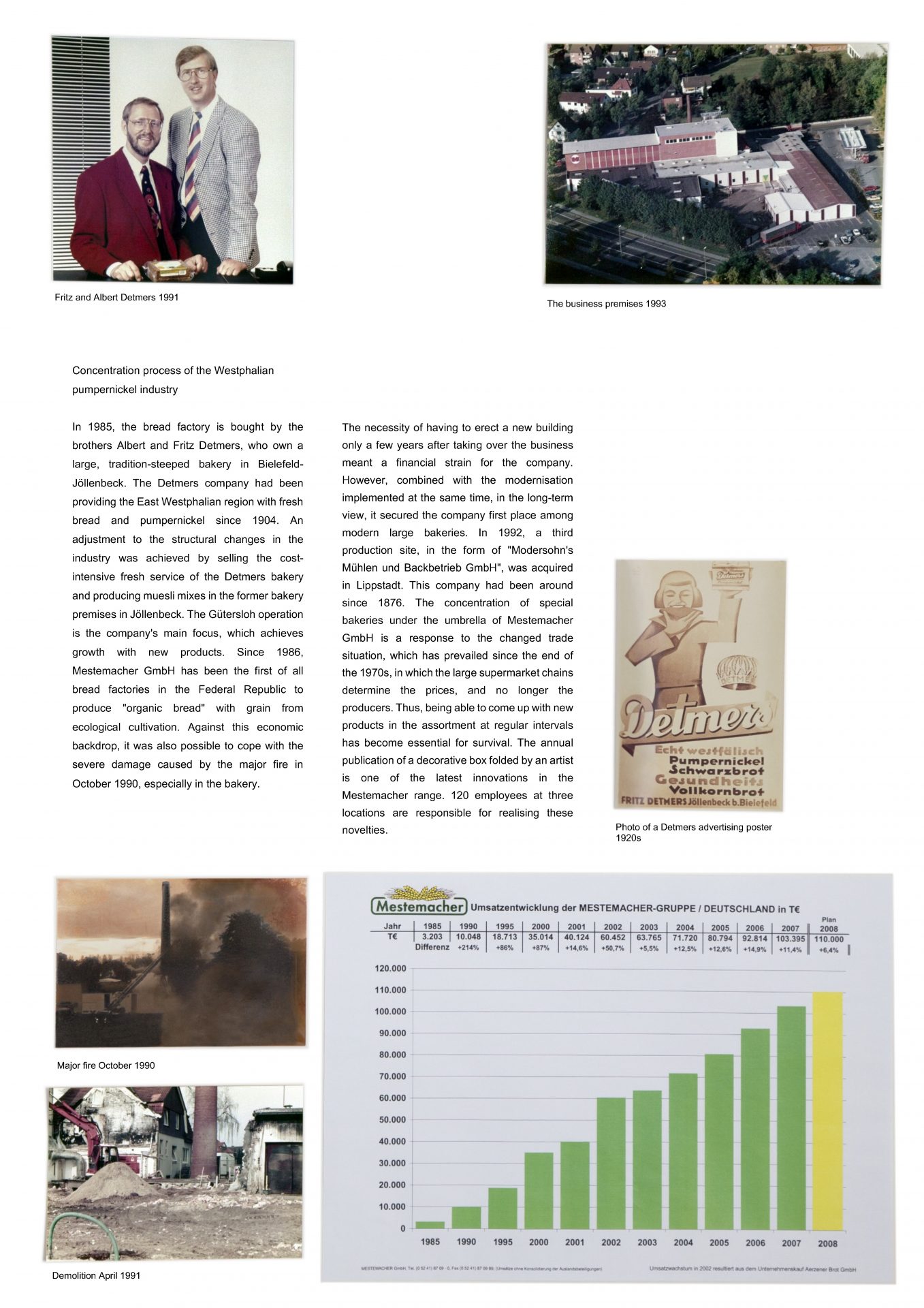
In 2020, the Mestemacher Group plant bakery achieves a net sales record of 16% with hygienically packaged, unopened long-life bread specialities. The Group‘s net sales amount to 147.4 million euros. In 2020, the family business invested 3.9 million euros geared to long-term profitability.
The investments provide further benefits for product qualities, automation, rationalisation, capacity expansion as well as the humanisation of work. The Group has a total of 649 employees. The export share is around 34 %. 77 % of export sales are generated in the member states of the European Union. Mestemacher has an export volume sold to third countries of 16 %. Mestemacher supplies 7 % self-service packed breads and baked goods to European countries outside the EU.
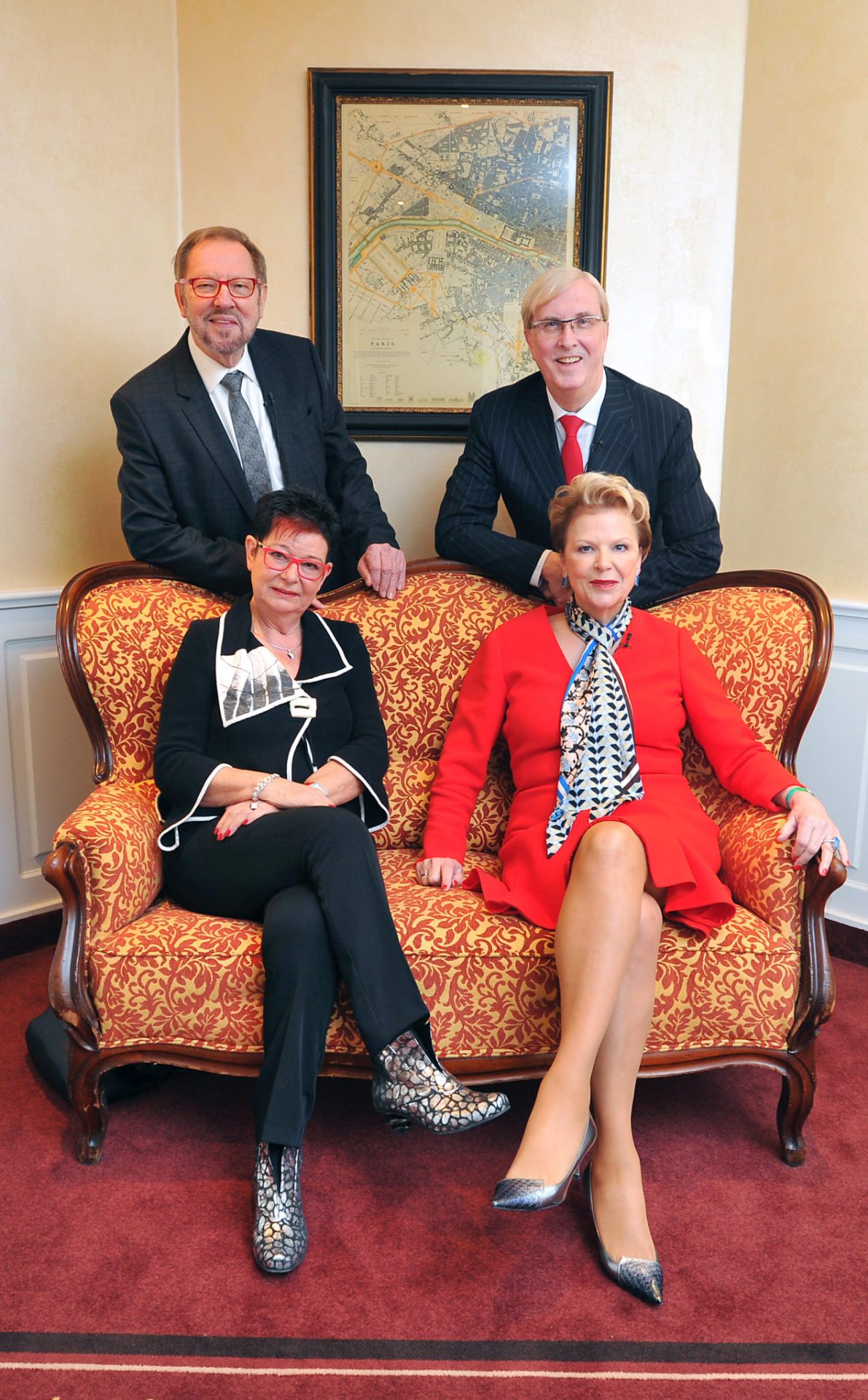
f.l.t.r.: Fritz Detmers, Albert Detmers, Helma Detmers and Prof Dr Ulrike Detmers
Mestemacher history from the original company in 1871
to the purchase of the company by the Detmers families in 1985